
Why Your Best Clients Aren’t Asking for More (and What That’s Costing You)

You delivered strong work. The client said so. The results were real. The relationship felt solid.
And then it quietly ended. Not with a complaint. Not with a dramatic conversation. The contract came up and nobody initiated what was next. Or the client achieved what they came for and couldn't see a reason to continue. Or their world changed and you weren't positioned as essential to the transition.
This is the pattern that costs consultants more than any failed engagement. Not losing clients because the work was bad. Losing them because nobody showed them what comes next.
Your client isn't leaving because they're dissatisfied. They're leaving because they're consumed. Think about the first time you drove across town. Hands on the steering wheel. Checking mirrors. Following every rule. You were so focused on the road in front of you that the bigger picture disappeared. And from the passenger seat, your parent said: "You're going to want to get over in about half a mile." You forgot the exit was coming. They could see what you couldn't see because they weren't the one driving.
That's your client. They're consumed by what's directly in front of them. They're not looking up to ask what happens next because they don't have the bandwidth. They need someone watching the road ahead. Someone who tells them what's coming before they have to ask.
Most consultants are waiting for the client to look up and ask. But the client doesn't have the bandwidth. They need proactive leadership. And in that gap, between what the client needs and what the consultant is waiting for, is where retention breaks down.
Your Client Is Waiting for You to Lead
Your client just received real value from you. You helped them solve a problem they couldn't solve on their own. They're standing in new territory. They're grateful. They're relieved. And they're looking at you.
Not because they're evaluating whether to continue. Because they don't know what the options are. They've never been at this point in the road before. You brought them here. They're waiting for you to tell them what comes next, the same way you waited for your parent to say "take this exit."
But many consultants never see this moment. They don't recognize it in order to take advantage of it. Other consultants feel resistance about it. Asking feels presumptuous. It feels aggressive. It feels like you're reaching for the money before the work has spoken for itself. So you tell yourself: if my work was good enough, they'd just give me the next project.
I held that belief for years — if the work speaks for itself, the client will automatically ask for more. They won't. Not because they don't value what you did, but because knowing where your service ends and what comes next isn't on their radar. They're fully occupied with their own world. If the relationship is going to continue in the most constructive way, they need your leadership — not just from deliverable to deliverable, but from one stage of the partnership to the next.
That assumption treats your client like they know the road. They don't. If they knew what to do next, they would have done it already. They wouldn't have needed to hire you in the first place.
Here's what's actually true. Your client has things they want to tell you. Old problems they've never fixed. Goals they've been holding quietly. Issues they're embarrassed about. Things that would surface immediately if someone created a safe moment to ask. But they're not going to volunteer those things unprompted. Not because they don't trust you. Because nobody built the moment for them to say it.
When you create that moment, the relationship changes. The client doesn't just agree to continue. They open up. They tell you about the skeletons in the closet, the things they've always wanted to address but never had a partner to address them with. And those things, the quiet goals and the longer-range aspirations, that's where the next year of work lives.
The Real Job Is Simpler Than You Think
Your client needs a frame big enough to hold what they're carrying. What they want from you now is perspective, not deliverables.
The annual frame is that perspective. Twelve months. Short enough to feel approachable. Long enough to feel strategic. When the client knows you can hold a year of their thinking, the things they've been carrying become safe to share.
When you understand that's the real job, helping your client see around corners, the work gets simpler. Think about the parent in the passenger seat. They're doing one thing: watching the road ahead. You measure success by how close, how fast, and how safe your client gets to their outcome. Not by volume. Not by effort.
What the Year Looks Like
Every ninety days, you pause. You look backward at what you accomplished together. You look forward at what's next. Are we on track? Do we need to adjust?
Without these quarterly reviews, the client goes twelve months without ever looking up. With them, the year has shape. Progress becomes visible. The conversations deepen because you're building on shared context instead of starting fresh every time.
Client Story
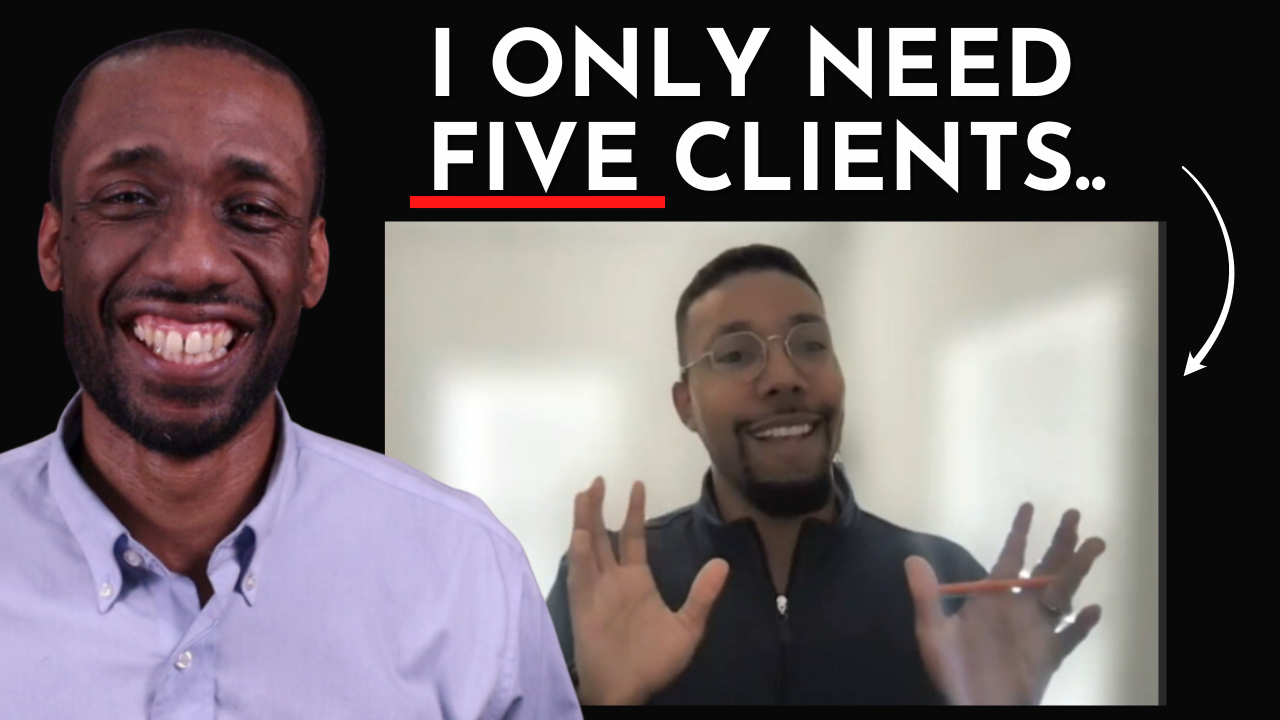
Tre Gammage — Fractional Chief Leadership Officer
Between the quarterly reviews, there's a weekly and monthly rhythm. Monthly, you track whether you're on pace. Weekly, the client has a touchpoint that keeps the direction alive. This rhythm holds their patience. Not every week produces a breakthrough. Not every month feels like progress. But because the frame holds the goal, individual weeks can breathe.
And then there are the moments nobody plans for. Market shifts. Leadership transitions. Budget pressures. Your job is to be watching for these before the client has to tell you about them. When disruptions arrive, you're the source of stability.
Client Story
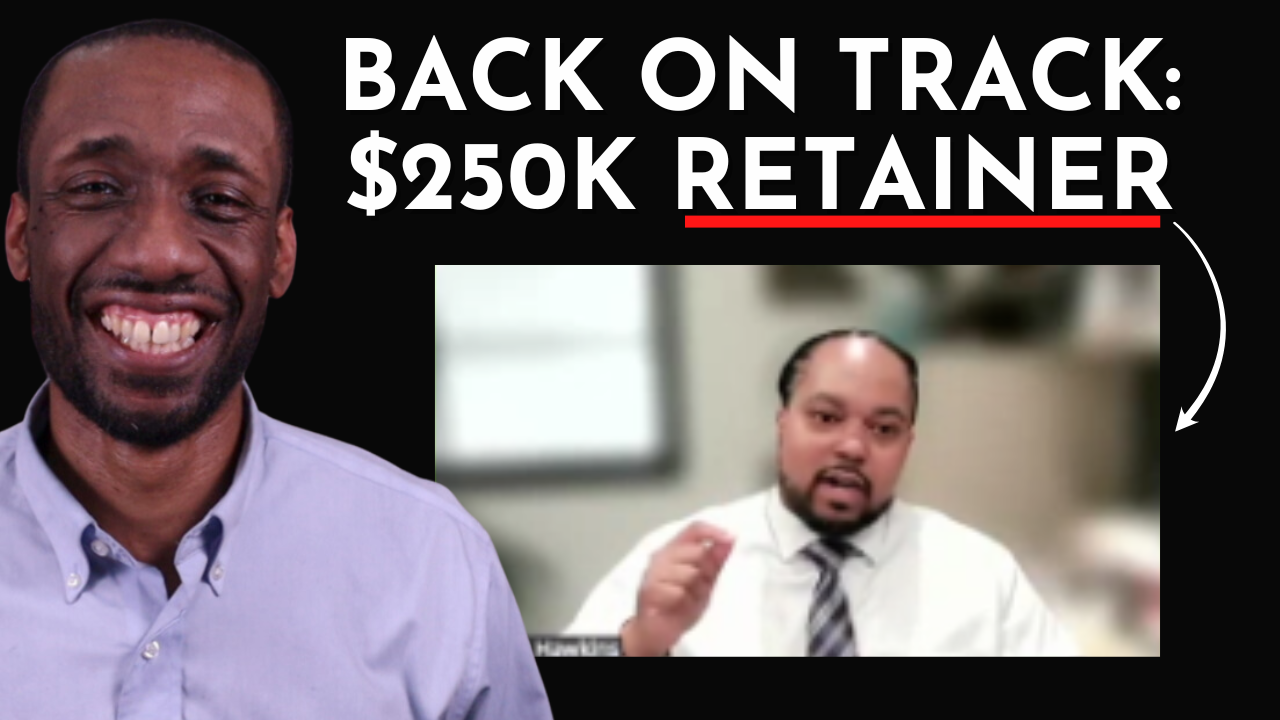
Cameron Hawkins — Law Firm Owner & Fractional CLO
What Long-Term Retention Makes Possible
Without the parent in the passenger seat, you only drove to the corner store and back. With them, you went across town. Same driver. Same car. The distance was possible because someone was watching the road ahead.
Retained relationships work the same way. The longer you stay, the further you go together. And because you're already there when the big moments arrive, you're prepared to respond to them.
As clients grow, there are spike moments: big opportunities, targets that change the scale of everything. When those moments arrive, your client reaches for the people they trust. They don't open a search. They turn to you.
Client Story
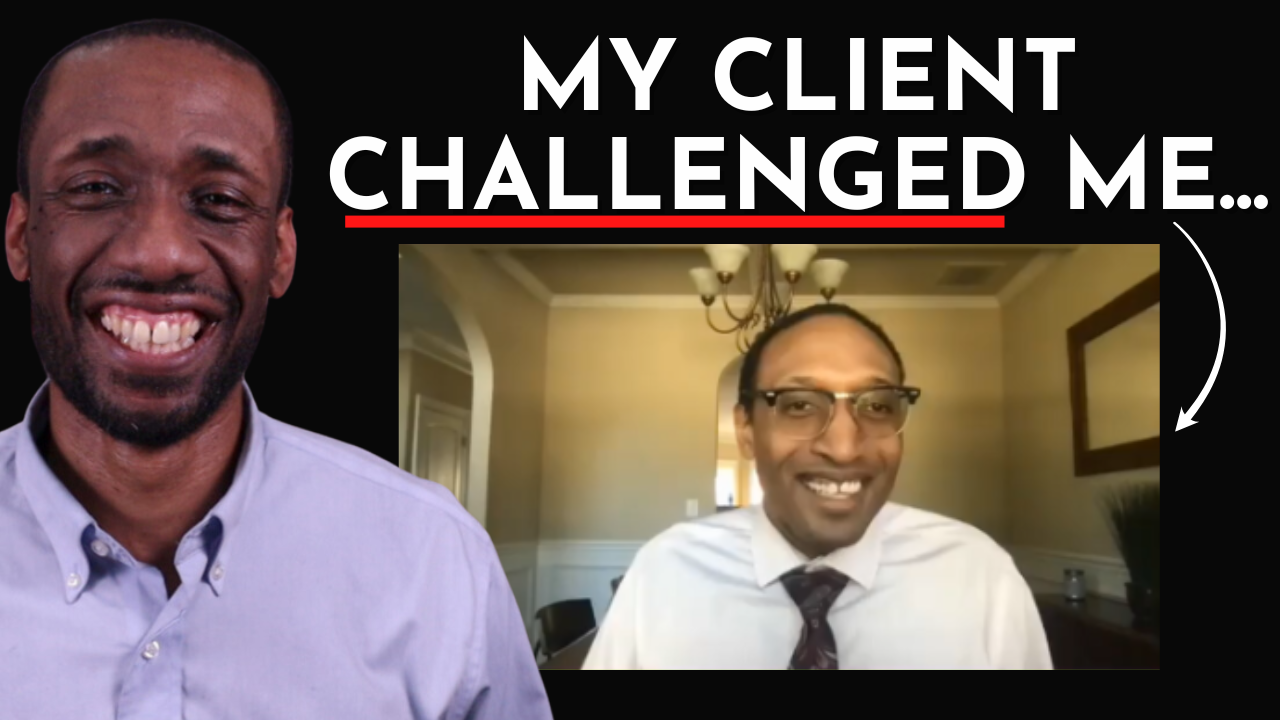
Amin Aleem — Fractional Chief Financial Officer
And something happens with repetition over time that short engagements can never produce. The same principle gets heard at progressively deeper levels. The first time you say it, the client understands it intellectually. Six months later, they can finish the sentence. A year in, they're applying it. Two years in, it's operating without conscious effort. Sometimes you have to trace the circle multiple times before you know you have a circle. Retained relationships produce the repetition that turns insight into behavior.
Three Things That Will Test the Relationship
Even when the frame is set and the rhythm is consistent, specific moments will challenge you. Each one feels different. Each one has a specific fix.
The renewal you haven't asked for. Your retainer client's contract is ending. Results are strong. But you haven't said a word about next year. The client already did their internal math. They already know the value. What they need isn't a presentation. It's a specific moment where the decision can be made. Read: Your Best Client's Contract Ends Next Month. You Haven't Said a Word. →
The goal you can't fully control. Your client sets an ambitious target and you know your piece is solid, but the whole goal depends on variables outside your domain. The answer isn't to promise everything or hedge until the client doubts you. It's to define your piece with precision and deliver it without fail. Read: Your Client's Goal Is Bigger Than Your Scope. Now What? →
The process you can't let go of. You've documented your work. You've delegated it to someone capable. The work holds. But you're still hovering. Trust in delegation isn't a switch. It's constructed one step at a time: do, document, delegate. The proof is underneath you. Read: You Documented Everything. You Still Can't Let Go. →
You Get Better at This the Longer You Do It
Every client's experience makes you better at the work. But the improvement isn't automatic.
When a client has a loud experience, a breakthrough or a breakdown, three questions surface. Did my framework break down here? Does the client need more support to execute what they understand? Or do they need their own experience with the consequence before the principle deepens?
Those are three different questions with three different responses. Sometimes the system needs adjustment. Sometimes the support needs to increase. And sometimes the most important thing is giving the client space to learn through their own experience, because the human reality of development is more important than any framework.
Over time, these reflections compound. You start recognizing patterns earlier. You know which moments will be difficult for which kinds of clients. You know when to push and when to give space. The advisor who has been doing this for five years sees things in the first quarterly review that took them a full year to recognize when they started.
This reflection also connects retention back to direction. The insights from retained clients don't just improve the service. They inform where the entire business goes next. Do you want to solve more of these problems? Different problems? Build different tools? The longest relationships produce the clearest signals about where your business should be headed.
How Client Retention Connects to Everything Else
Before you can retain a client, you need to know what work you want to repeat. That's a choice that requires honesty about what you're best at. Explore how direction-setting works →
The work you chose to repeat became language that attracted the right person. Explore how client acquisition works →
The person who arrived received a service designed for their outcome. Explore how client service works →
Now the relationship either deepens or ends. What was process in service becomes partnership in retention. The case study that started as a choice, became language, became process, now becomes a living relationship that compounds with every quarterly review.
That's what client retention actually is. Not holding onto clients through effort and charm. Being the person in the passenger seat who never stops watching the road ahead.
Frequently Asked Questions
My client seems happy. Do I really need to bring up what's next?
Happy clients don't automatically become retained clients. They become former clients who remember you fondly. Without a moment to decide what comes next, the momentum fades. You're not being pushy by asking. You're being responsible.
How do I bring up renewal without it feeling like a money conversation?
Present what you accomplished together. Show what's ahead. Ask how they feel about continuing. When the evidence is in front of both of you, the money conversation is the smallest part.
What if my client's goals are bigger than what I can deliver?
They almost certainly are. Your job isn't to deliver the whole goal. It's to own your piece so thoroughly that it's one less thing they worry about.
How do I know when a client relationship has run its course?
When the quarterly reviews stop producing new direction. When the client's needs have genuinely moved outside your domain. When the momentum you're measuring has flatlined despite the structure being in place. The frame makes this visible. Without it, relationships drift indefinitely in both directions.
How long before the compounding effect becomes visible?
The relationship gets more effective from the first quarterly review. Visible compounding, where conversations start at a higher level and context carries itself, typically takes two to three quarters. By the end of a full year, both parties can feel the difference between this and starting fresh with someone new.
Find Your Best Work.
You've done the work. You've gotten the results. You just haven't had a way to organize what you know so it's ready when the moment arrives.
Let's fix that together. It starts with one conversation.

Alzay Calhoun
Alzay Calhoun believes that consultants don't need more tactics — they need a place to think. For 13+ years, he's helped experts earning $100K–$500K find their best work and build systems around it. "The frameworks behind Coveted Consultant were built from real client work. They're documented across 505 YouTube videos, 25+ case studies, and an ongoing coaching practice.